SAVTE provides a range of English learning opportunities. These may be in the home, in an in-person conversation group or in an online conversation group.
Learn at home
SAVTE’s language volunteers support people in their homes to help them learn and practice English.
We teach people who cannot go to a class, usually due to health reasons or caring responsibilities.
Our provision is not top down but person-centred. We support our participants to achieve their self-defined goals at an individual level in our 1:1 programme.
Most learners are referred from organisations supporting people, but if you know someone who is isolated and could benefit from one to one support, please complete our referral form.
If you experience any difficulties in filling out the form, please contact us at savte@savte.org.uk or call us on 0114 212 3050.
Learn in a conversation group
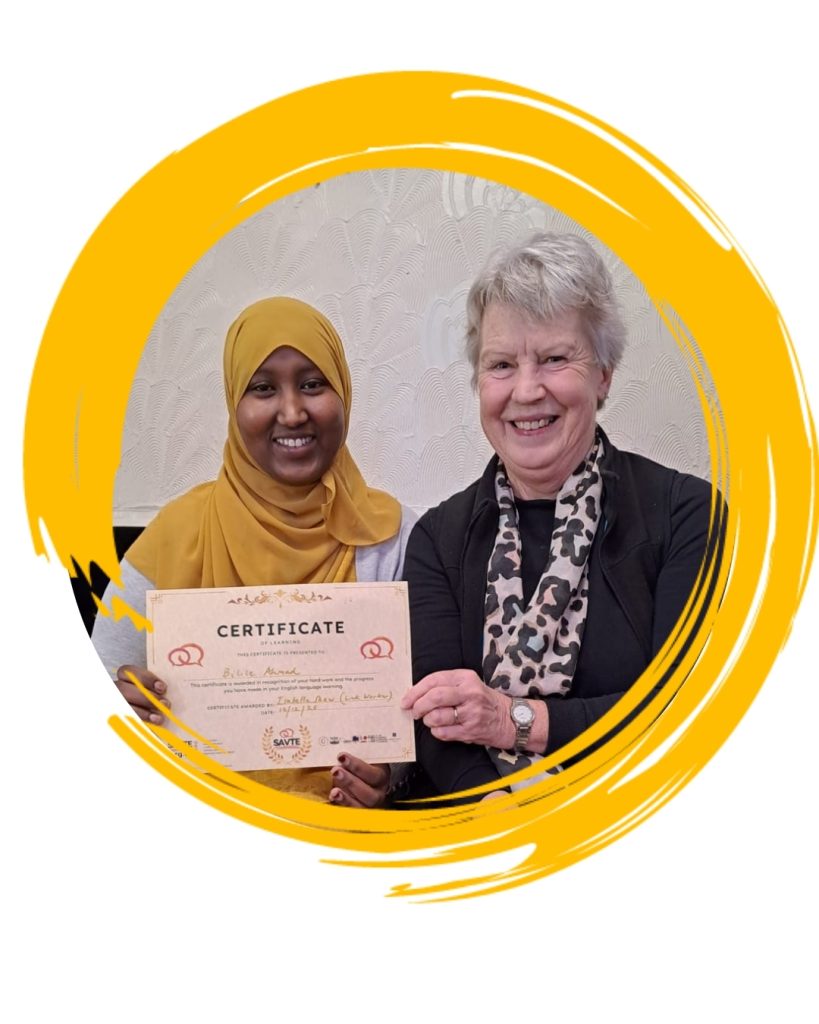
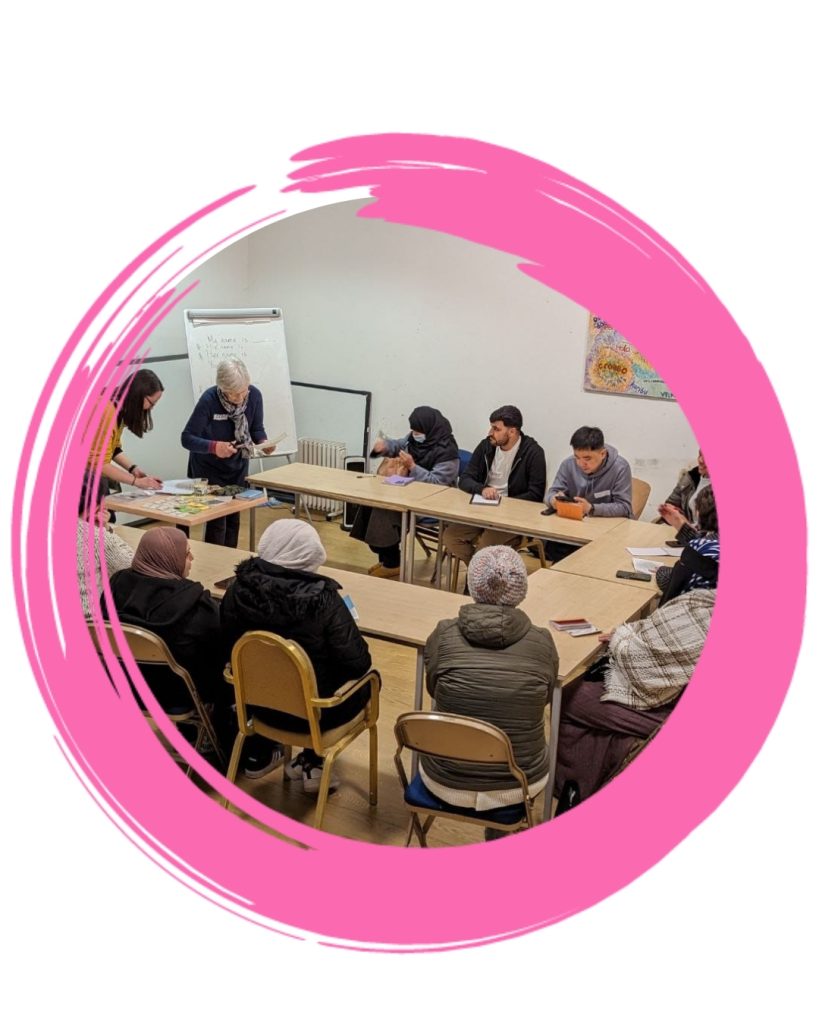
Everyone is welcome at our conversation groups. They are free to attend and open to anyone who wants to practice their English and meet other people. Some of our groups are women only – please check.
You can check the SAVTE conversation group timetable to view the locations and times of each of our groups..
If you need to refer someone to an online conversation group please fill out this form.
SAVTE works with local organisations to start new groups where there is a need. Please get in touch with us.
All our groups are now on the Learning English website www.learningenglish.org.uk
This website lists all English classes in Yorkshire and the Humber. All of SAVTE’s classes and conversation groups are listed here, along with many others.
Below is some feedback from a mental health social worker in the Sheffield Health and Social Care Trust:
“As a mental health social worker, I have witnessed the very positive work done by SAVTE volunteers. The kindness of the organisation alongside the confidence people develop in speaking English is great and clearly assists mental health recovery. My client ZM got to the point where she was managing without the need for an interpreter at most of her support sessions. The kindness of the volunteer was very important to assisting the client’s progress.”